


What is Natural Process Coffee? (Dry Process Explained)
Natural Coffee Processing.
The natural process, also known as the dry coffee processing method, is a traditional technique where the entire coffee cherry remains intact during the drying stage. Unlike the washed process, which removes the fruit pulp before drying, natural processing allows the coffee bean to dry inside the fruit.
This simple, low-cost method requires minimal machinery, making it highly accessible to small-scale farmers. It is widely recognised for producing coffees with heavy bodies, intense sweetness, and complex, fruit-forward flavour profiles. Long before modern machinery and massive wet mills came into play, farmers relied on the sun and a lot of patience to get the beans out of the coffee cherry. It’s a beautifully simple, low-cost approach that requires minimal equipment but yields some of the most complex, sought-after flavours in the coffee world.
How the Natural Coffee Process Works: Step-by-Step
The natural processing method follows four primary stages:
-
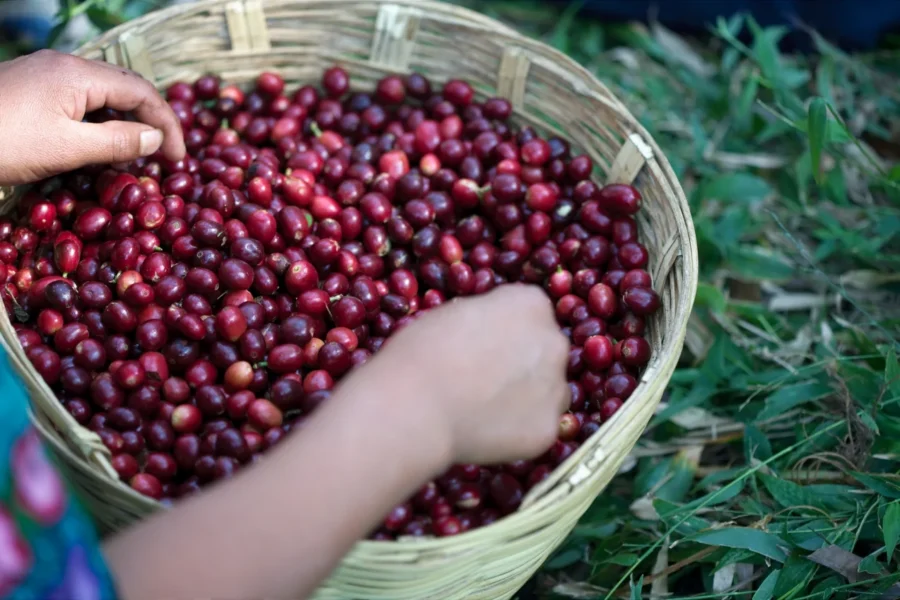
Harvesting: It all begins on the branch. Because the fruit stays attached to the bean for weeks, farmers must hand-pick the coffee cherries when they are perfectly, fully ripe. Unripe or overripe cherries will ruin the flavour profile of the entire batch, meaning precision at harvest is everything.
-
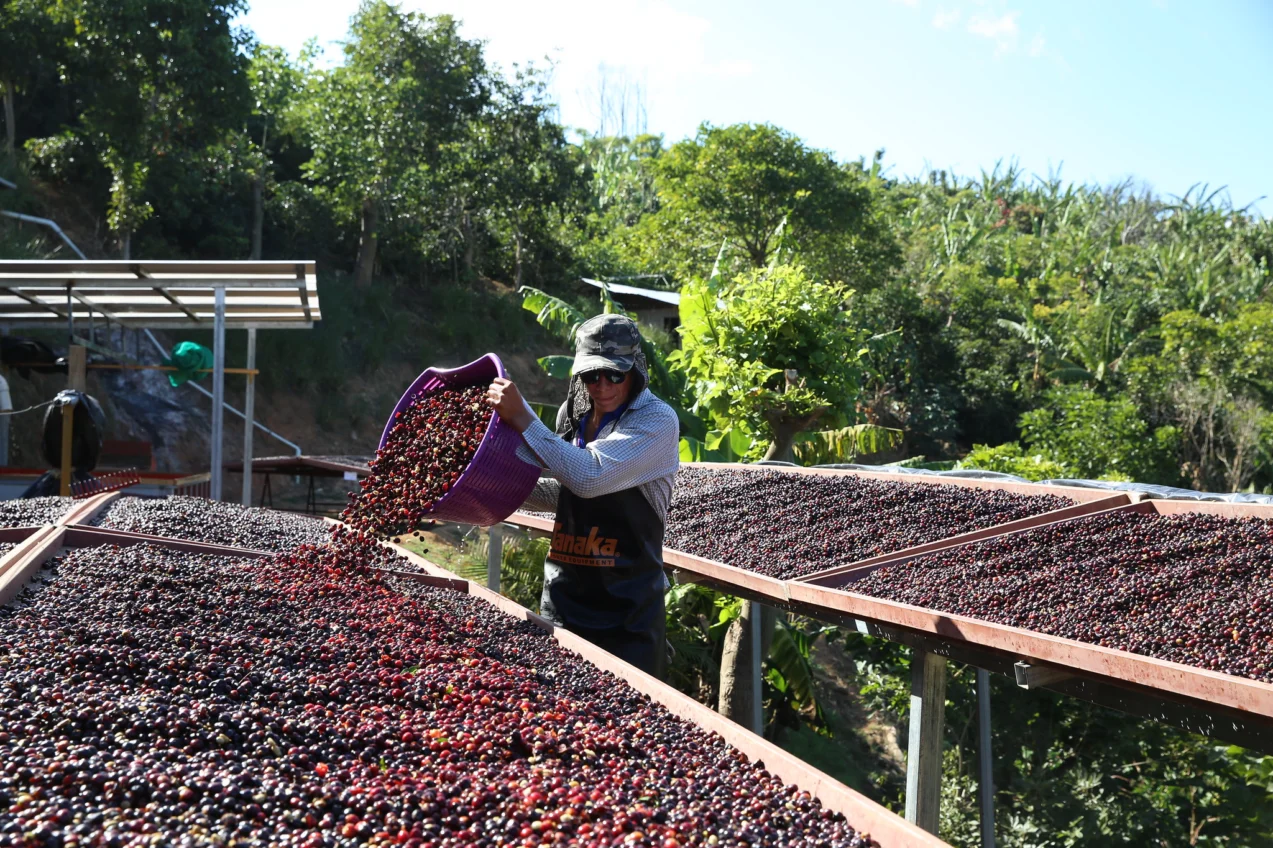
Sun-Drying: Once harvested, the whole cherries are spread out in thin layers on large concrete patios or raised drying beds. Over the next several weeks, the sun does the heavy lifting. Workers must constantly rake and turn the cherries to ensure they dry evenly and to prevent rot.
-
Raking and Turning: Workers regularly rake and rotate the cherries to ensure even drying and prevent mould or over-fermentation.
-
Hulling and Grading: Once the cherries reach the perfect level of dryness, looking a bit like hard, dark raisins, they are sent to a hulling machine to strip away the dried outer layers. Finally, the green beans are sorted and graded by size, shape, and overall quality. The best beans are set aside for the specialty export market, while the lower grades stay behind for local consumption.
The Role of Fermentation: As the cherries bake under the sun, the beans lose moisture, shrink, and become denser. But the real magic happens on a microscopic level. The sugars in the surrounding fruit pulp begin to naturally ferment, deeply infusing the coffee bean inside with complex flavours and aromas.
Flavour Profile of Natural Process Coffee
Natural process beans are highly sought after by speciality coffee roasters due to their unique sensory characteristics:
-
Taste Notes: Distinctly sweet, berry-like, and tropical (often featuring prominent notes of blueberry, strawberry, or wine).
-
Body: Heavy, syrupy, and full-bodied.
-
Aroma: Highly complex, intense, and distinctly fruity compared to washed coffees.
Advantages and Disadvantages of Natural Processing
| Advantages | Disadvantages |
| Low-Cost Production: Requires minimal infrastructure and no expensive water-gulgping pulping machinery. | Weather Dependent: Highly vulnerable to unexpected rain, frost, or prolonged high humidity. |
| Sustainability: Eco-friendly method that uses significantly less water than the washed process. | Risk of Defect: Prolonged exposure to elements increases susceptibility to mould, rot, and uneven drying. |
| Premium Market Value: Allows small-scale farmers to produce unique, high-value specialty coffees. | Inconsistency: Harder to standardise flavour profiles on an industrial scale without strict quality control. |
Natural coffee processing is very eco-friendly
The natural coffee processing method is an eco-friendly, traditional technique favoured by small-scale producers to cultivate high-value, fruit-forward gourmet coffee. While it minimises machinery costs and water usage, it demands meticulous labour and ideal dry weather conditions to avoid defects. Because it relies heavily on manual quality control rather than mechanisation, it is better suited to small scale independent producers. Natural processing belongs to the artisans, the small-scale producers committed to incredibly high standards, meticulous hand-sorting, and working in harmony with their local climate.